
Investigating the Mediterranean diet...
The Fundamental Principles of the Mediterranean Diet
Through this protection we want to preserve the idea of the community that revolves around food and the approach that we should take, underlining the importance of knowing traditions, passing them down from generation to generation as fundamental know-how for dealing with daily life, respecting local specialities, gastronomic preparations and events aimed at valorising them (festivals, parties) in which the social aspect of food is valorised, around which a community is found. Another important aspect is represented by the sustainability of the Mediterranean Diet, which is fundamental to consider.
The model we are referring to, studied around the 1950s by Ancel Keys, is proposed as a healthy model, characterized by the ability to prevent numerous pathologies, including cardiovascular diseases, which represent the leading cause of death in the world.
The World Health Organization and FAO also support this model, which has demonstrated beneficial effects on human and environmental health.
Despite this, unfortunately, there is a great divergence from the proposed model, also due to changes in lifestyle, social organisation, variations in working contexts, and radical changes in socio-economic conditions. Therefore, it is of fundamental importance to support the return to the Mediterranean model by promoting its knowledge.

Mediterranean Diet PYRAMID
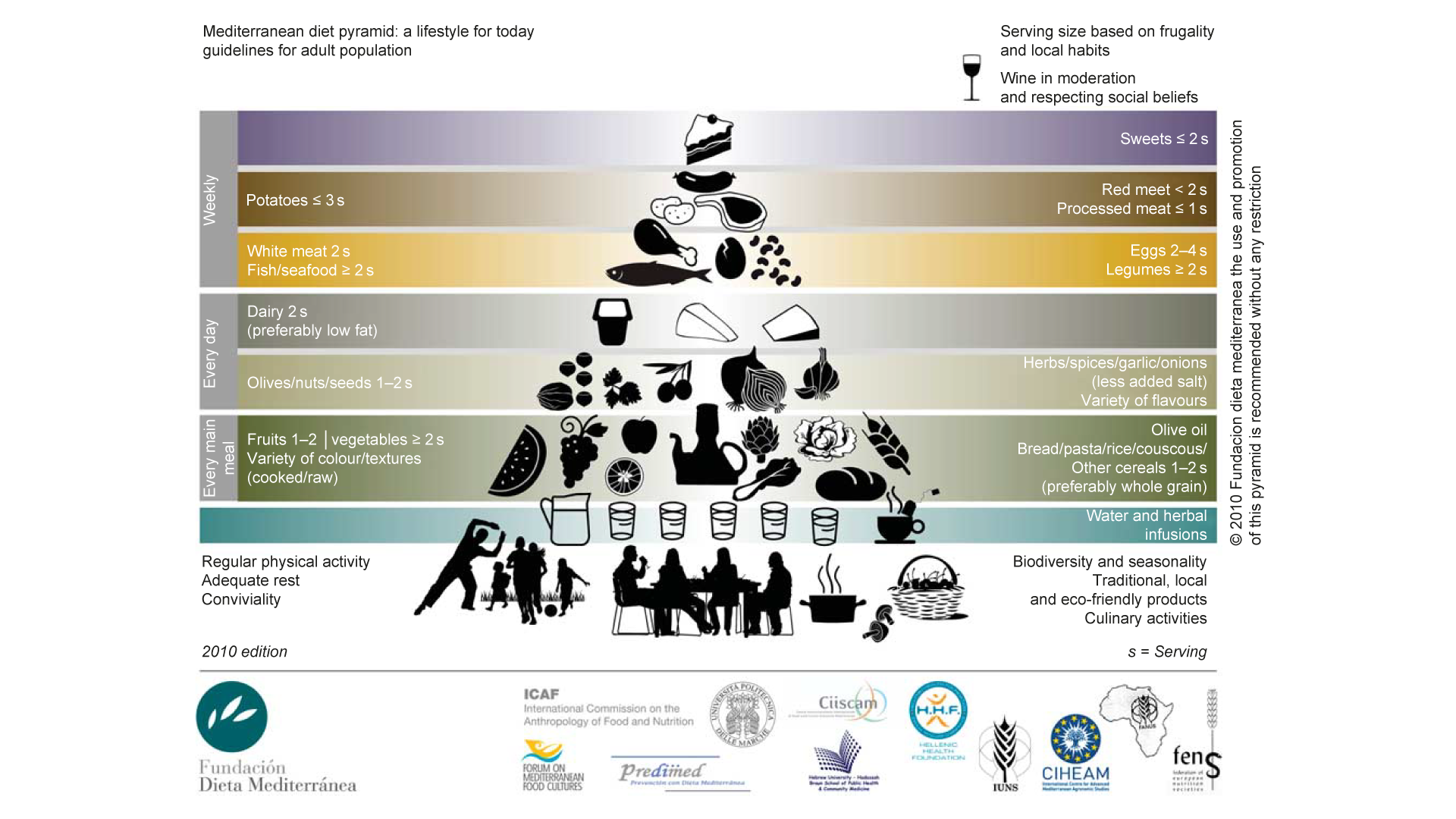
The Mediterranean diet is graphically represented by the Mediterranean Diet pyramid, which helps to identify immediately which foods should be eaten every day, placed at the base, and which ones should be eaten in moderate amounts as you go upwards.




Mediterranean Diet Cornerstones
Healthy Food for Good Growth
The monounsaturated fatty acids and polyphenols in olive oil support heart health by reducing LDL cholesterol levels and blood pressure.
Antioxidant and anti-inflammatory compounds found in fruit, vegetables and fish help maintain cognitive function over time.
The high fibre content and low glycaemic index of many plant foods help keep blood sugar levels stable.
Tool4MEDLife
The Mediterranean Diet Pattern represents a balance between taste and health, offering an approach to nutrition that is both traditional and sustainable.
The Tool4medlife project aims to encourage the adoption of healthy lifestyles and nutrition, which represent a sustainable and democratic solution to improve people’s physical and mental health.
Starting by analyzing the influence on healthy eating practices, through research on targeted regions’ food habits and to better understand the connection between physical and mental health and dietry patterns. Studying and designing new and healthy foods derived from extra virgin olive oil and dairy products, aiming to enhance sustainability, nutritional quality, acceptability, accessibility, and attractiveness. Developing tailored educational strategies to improve adherence to the Mediterranean Diet and increase awareness of healthy eating behaviors.

- Davis, C., Bryan, J., Hodgson, J., & Murphy, K. (2015). Definition of the Mediterranean diet: a literature review. Nutrients, 7(11), 9139-9153.
- Serra-Majem, L., Tomaino, L., Dernini, S., Berry, E. M., Lairon, D., Ngo de la Cruz, J., Bach-Faig, A., Donini, L.M., Medina, M., Belahsen, R., Piscopo, S., Capone, R., Aranceta-Bartrina, J, La Vecchia, C., and Trichopoulou, A. (2020). Updating the mediterranean diet pyramid towards sustainability: Focus on environmental concerns. International journal of environmental research and public health, 17(23), 8758.
- Serra-Majem, L., & Medina, F. X. (2020). Mediterranean diet: A long journey toward intangible cultural heritage and sustainability. In The Mediterranean Diet (pp. 13-24). Academic Press.
- FAO and WHO (2019). Sustainable healthy diets – Guiding principles. Rome.